


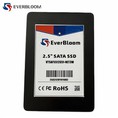
In the realm of modern data storage, Solid State Drives (SSDs) have emerged as the go - to solution for their speed, reliability, and efficiency. As an SSD supplier, I often encounter questions from customers regarding various aspects of SSDs, and one topic that frequently comes up is whether the endurance rating affects SSD lifespan. In this blog, we'll delve deep into this subject, exploring the science behind endurance ratings and their implications for SSD longevity.
Understanding Endurance Rating
The endurance rating of an SSD is a crucial metric that provides an estimate of how much data an SSD can write over its lifetime. It is typically expressed in terms of Terabytes Written (TBW) or Drive Writes Per Day (DWPD).
TBW is a straightforward measure that indicates the total amount of data, in terabytes, that the drive can handle before it is likely to experience a significant degradation in performance or fail. For example, an SSD with a TBW rating of 500TB can theoretically write up to 500 terabytes of data throughout its lifespan.
DWPD, on the other hand, is a more complex metric. It represents the average amount of data that can be written to the drive per day over a specified warranty period. For instance, a drive with a DWPD of 3 for a 5 - year warranty means that, on average, it can write 3 times its total capacity every day for 5 years.
How Endurance Rating is Determined
The endurance rating of an SSD is determined through a series of rigorous tests conducted by the manufacturer. These tests simulate real - world usage scenarios to assess how the drive's NAND flash memory, the core component responsible for data storage in an SSD, degrades over time.
NAND flash memory has a limited number of Program - Erase (P/E) cycles. Each time data is written to a block of NAND flash (a program operation) and then erased, it undergoes one P/E cycle. With each cycle, the cells in the NAND flash gradually lose their ability to hold a charge accurately, which can lead to data errors.


Manufacturers use sophisticated algorithms and techniques to manage these P/E cycles. For example, wear - leveling algorithms distribute write operations evenly across all the available NAND flash cells in the drive. This helps to ensure that no single cell is subjected to an excessive number of P/E cycles, thereby extending the overall lifespan of the drive.
Impact of Endurance Rating on SSD Lifespan
The endurance rating has a direct impact on the lifespan of an SSD. A drive with a higher endurance rating is generally expected to last longer, especially in high - write environments.
In consumer - grade applications, such as personal computers used for general web browsing, document editing, and media consumption, the write workload is relatively low. In these cases, even an SSD with a moderate endurance rating can last for many years. For example, a typical consumer - grade NVMe M.2 PCIe 4.0 SSD with a TBW rating of 200TB may be more than sufficient for most home users.
However, in enterprise - grade applications, such as data centers, servers, and high - performance workstations, the write workload can be extremely high. These environments often require continuous data logging, database transactions, and other write - intensive operations. In such cases, an SSD with a high endurance rating is essential. An enterprise - grade NVMe M.2 PCIe 3.0 SSD with a DWPD of 5 or more can better withstand the heavy write demands and provide a longer lifespan.
Other Factors Affecting SSD Lifespan
While the endurance rating is an important factor, it is not the only one that affects SSD lifespan. Other factors include:
Temperature
High temperatures can accelerate the degradation of NAND flash memory. When an SSD operates in a hot environment, the electrons in the NAND flash cells become more active, which can lead to a higher rate of charge leakage and a shorter lifespan. To mitigate this, many SSDs are equipped with thermal management features, such as heat sinks and temperature sensors.
Power Cycling
Frequent power cycling, such as turning the computer on and off multiple times a day, can also affect the lifespan of an SSD. Each power cycle can cause a small amount of stress on the drive's components, including the NAND flash memory and the controller.
Over - Provisioning
Over - provisioning is a technique where a portion of the SSD's capacity is set aside and not made available to the user. This extra space is used by the drive's controller for wear - leveling and error - correction purposes. Drives with more over - provisioning tend to have a longer lifespan because they can better manage the P/E cycles and handle data errors.
Choosing the Right SSD Based on Endurance Rating
When choosing an SSD, it is important to consider your specific usage requirements. If you are a home user with light write demands, a consumer - grade SSD with a moderate endurance rating will likely suffice. However, if you are an enterprise user or a professional with high - write requirements, you should opt for an SSD with a high endurance rating.
For example, if you are running a database server that requires continuous data updates, a MSATA SATA III SSD with a high DWPD rating would be a better choice. On the other hand, if you are using an SSD in a laptop for general use, a standard NVMe M.2 SSD with a reasonable TBW rating will be more than adequate.
Conclusion
In conclusion, the endurance rating does have a significant impact on SSD lifespan, especially in high - write environments. However, it is just one of the many factors that affect how long an SSD will last. Other factors such as temperature, power cycling, and over - provisioning also play important roles.
As an SSD supplier, I am committed to providing our customers with high - quality SSDs that meet their specific needs. Whether you are a consumer looking for a reliable drive for your personal computer or an enterprise in need of a high - performance storage solution, we have a wide range of products to choose from.
If you are interested in learning more about our SSD products or have questions about endurance ratings and SSD lifespan, we encourage you to contact us for a procurement discussion. Our team of experts will be happy to assist you in selecting the right SSD for your requirements.
References
- Chen, P. M., Lee, E. K., Gibson, G. A., Katz, R. H., & Patterson, D. A. (2009). RAID: High - performance, reliable secondary storage. ACM Computing Surveys (CSUR), 32(2), 145 - 185.
- Flash Memory Summit. (2022). Understanding SSD Endurance: Key Metrics and Testing Methods. Retrieved from various conference materials.
- NAND Flash Association. (2021). Best Practices for NAND Flash Memory Management. White paper.