


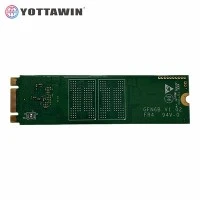

DDR
Your Professional DDR Memory Modules Supplier!
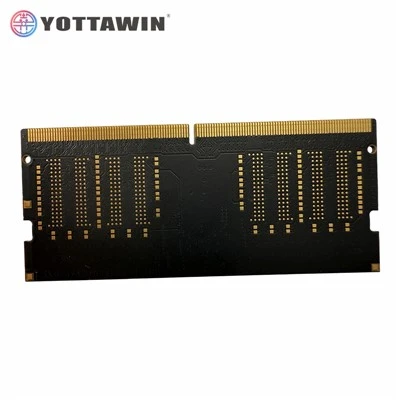
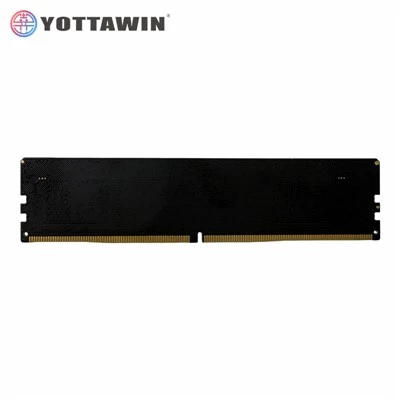
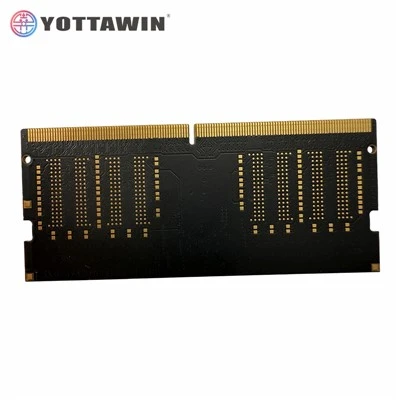
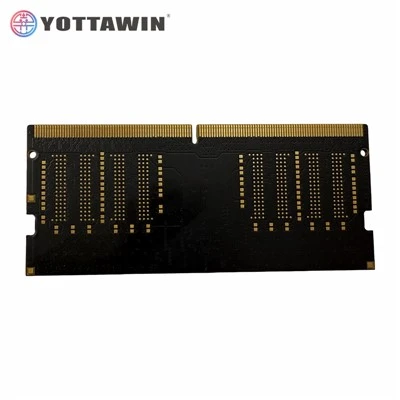
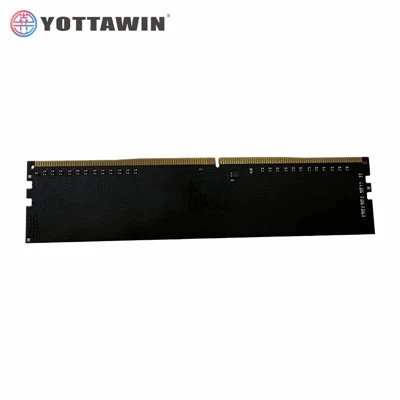
DDR memory plays a critical role in system performance, stability, and multitasking efficiency. As a professional DDR memory supplier, YOTTAWIN offers a broad portfolio of DDR4 and DDR5 memory modules, covering UDIMM, SODIMM, ECC UDIMM, RDIMM, and server memory solutions.
We work with qualified DRAM resources and rigorous quality inspection processes to provide reliable memory solutions for industrial, embedded, enterprise, and commercial applications. Whether you need standard modules, project-based customization, or long-term supply support, our team is committed to delivering dependable products and responsive service.
Why Choose Us
Professional Certifications
We have obtained numerous international certifications, including CE, FCC, ISO, and RoHS, ensuring our products meet global market access requirements and technical standards.
Professional R&D Team
We currently have over 1,800 employees, approximately 70% of whom are R&D technicians. They possess deep technical expertise and continuous innovation capabilities, enabling them to support the technical development needs of complex projects.
Customized Services
We offer customized design and optimization services tailored to our customers' specific needs and application scenarios. Relying on a rigorous quality control system and standardized production management processes, we ensure that every step meets international standards and meets our customers' individual requirements.
Extensive Experience
With over 20 years of industry application experience, we integrate R&D, production, sales, and export operations. Our products are widely used in key areas such as defense technology, aerospace, intelligent monitoring systems, and high-end equipment manufacturing, accumulating a solid foundation of industry experience.
Specification
|
Parameter |
Specifications |
|
Memory type |
DDR5 UDIMM |
|
Capacity options |
8GB/16GB/32GB/64GB |
|
Speed class |
4800MT/s, 5200MT/s, 5600MT/s |
|
Working voltage |
1.1V |
|
Sequence |
CL40, CL42 etc. (depending on speed class) |
|
Number of Pins |
288pin |
|
Error correction |
On-Die ECC |
|
Working temperature |
Commercial grade: 0℃-70℃ Industrial grade: -40℃-85℃ |
|
Storage temperature |
-40°C ~ 85°C |
|
Altitude |
31.25mm (Standard height) |
|
Defects liability period |
Lifetime limited warranty |
Benefits of DDR
Faster data transfer rates: DDR memory can transfer data on both the rising and falling edges of the clock signal, allowing faster data transfer rates than SDR memory.
Increased bandwidth: The faster data transfer rates of DDR memory also result in increased bandwidth, which is the amount of data that can be transferred in a given period. Therefore, DDR memory can handle more data at once, which is particularly useful for devices that require high performance, such as servers and gaming consoles.
Improved power efficiency: DDR memory is more power-efficient than SDR memory, which means that devices that use DDR memory will consume less power and generate less heat. This is particularly useful for mobile devices, which need to conserve power to last longer on a single charge.
Higher capacity: DDR memory is available in different versions, such as DDR1, DDR2, DDR3, DDR4, and DDR5; each version has different capacity specifications. For example, DDR1 memory has a maximum capacity of 1 GB, while DDR4 memory has a maximum capacity of 16 GB. Therefore, devices that use DDR memory can store more data than devices that use SDR memory.
Synchronized with the system clock: DDR memory is also known as DDR SDRAM (Synchronous Dynamic Random Access Memory), which means that the memory is synchronized with the system clock.
Widely used in various applications: DDR memory is used in many devices, including personal computers, servers, gaming consoles, and mobile devices. It is also used in other applications, such as automotive systems and industrial automation, making it a versatile technology with many uses.
Types of DDR
DDR1: DDR1 supports a clock speed starting from 100 - 200 MHz and for data transfers - up to 1.6 GB/s to 3.2GB/s. Its fast, double the speed as in data with no increase taken in clock speed hence making it faster than any other memory.
DDR2: It has an operating speed of 200 to 533 MHz and has clock speed ranges from 400 to 1066 MHz. And, this results a transfer rate of 3.2 GB/s to 8.5 GB/s. This consumes little power because of their lower operating voltages; this, coupled with other enhanced functionalities, consists of ODT.
DDR3: DDR3 had more optimization on the balance between performance and power efficiency. DDR3 had operational speeds starting from 400 to 1066 MHz, while their clock ran at a speed of 800 to 2133 MHz hence giving data transfer rates between 6.4 GB/s and 17GB/s.
DDR4: DDR4 ran base speeds of 800 MHz with effective speeds from 1600 to 3200 MHz, which in turn is data transfer rates of 12.8 GB/s to 25.6 GB/s. DDR4 also holds even lower operating voltages, improved error correction facilities like ECC, or Error-Correcting Code memory, which further jacked up the reliability and efficiency of the system.
DDR5: DDR5 starts from speeds of 1600 MHz, while clock speed starts from 3200 MHz up to 6400 MHz. Data transfer rates start from 25.6 GB/s and even up to 51.2 GB/s for the first time. Cover everything from basic to the most advanced features such as on-die ECC, two independent channels of 32-bit each per module, higher capacity memory modules; therefore, it makes it ideal for AI, gaming, etc.
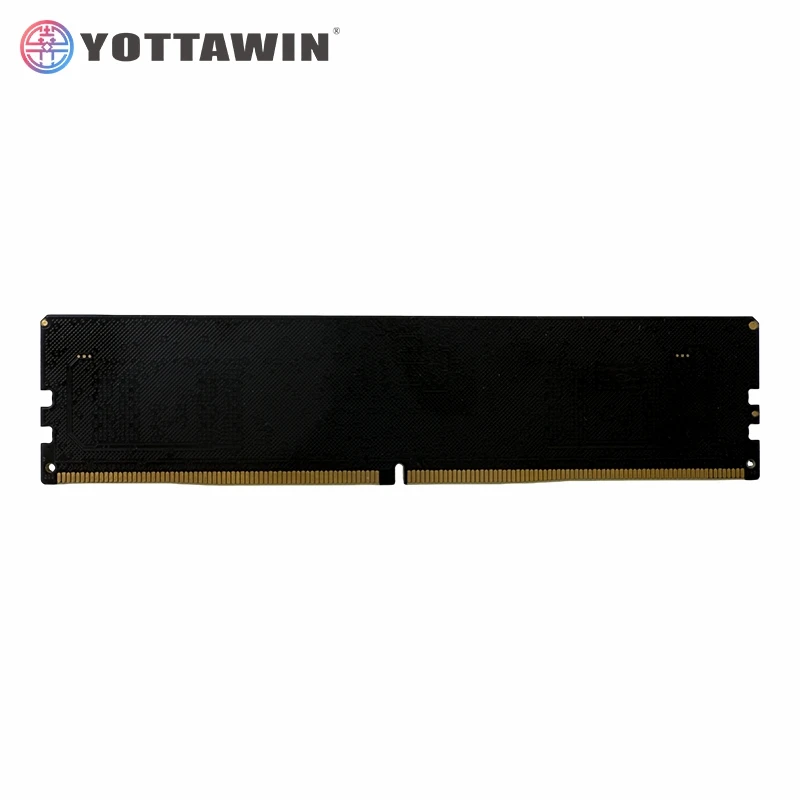
Double Data Rate transfers data on the rising and falling edges of the clock signal, allowing for faster data transfer rates. Each major revision of the DDR standard has roughly doubled the memory bandwidth.
The basic building block of DDR memory is the memory cell, composed of a storage capacitor and a transistor. The storage capacitor holds the charge representing the data stored in the memory cell, while the transistor controls the flow of charge to and from the storage capacitor. When data is written to DDR memory, the charge on the storage capacitor is changed to represent the data. The data is stored in the memory cell at a voltage level, with a high voltage representing 1 and a low voltage representing 0. When data is read from DDR memory, the voltage level on the storage capacitor(opens in a new tab) is measured, and the data is read as “1” or “0,” depending on the voltage level.
Applications of DDR
High-Performance Computing
DDR plays a crucial role in high-performance computing systems, such as servers, workstations, and supercomputers. Its ability to transfer data at high speeds and provide high bandwidth is essential for handling large datasets and computationally intensive tasks. DDR is widely used in scientific simulations, data analysis, and parallel processing applications that require high memory throughput.
High-Performance Computing
DDR plays a crucial role in high-performance computing systems, such as servers, workstations, and supercomputers. Its ability to transfer data at high speeds and provide high bandwidth is essential for handling large datasets and computationally intensive tasks. DDR is widely used in scientific simulations, data analysis, and parallel processing applications that require high memory throughput.
Mobile Devices
While mobile devices typically use low-power variants of DDR, such as LPDDR, the high-speed data transfer capabilities of DDR are still essential for supporting demanding applications and multitasking on smartphones, tablets, and other portable devices. DDR enables smooth multitasking, seamless video playback, and efficient data processing in mobile devices.
Network and Communication Systems
DDR is widely used in network and communication systems, such as routers, switches, and network appliances. These systems require high-speed memory to process and route large amounts of data efficiently. DDR's high bandwidth and low latency make it suitable for packet processing, IP lookup, and other network-related tasks.
Embedded Systems and IoT Devices
Embedded systems and Internet of Things (IoT) devices often incorporate DDR for its high-performance capabilities and low power consumption. DDR enables real-time data processing, efficient data storage, and fast response times in applications such as industrial automation, medical devices, and smart home systems.
Data Acquisition and Signal Processing
In data acquisition and signal processing applications, DDR is used to store and process large amounts of data in real time. Its high bandwidth and low latency are essential for capturing and processing high-speed signals, such as those found in radar systems, medical imaging equipment, and scientific instrumentation.
Service
B2B Support
OEM/ODM customization, tiered pricing (min. 100 pcs), free samples for qualified customers.
Technical Support
Compatibility reports, firmware upgrades, installation guides/videos.
Logistics
72-hour delivery in major markets, anti-static packaging, full tracking.
After-Sales
3-year warranty, quick replacement of faulty parts, technical hotline.
Order Process
Contact Customer Service
1
>>
Submit Order
2
>>
Obtain a Quote
3
>>
Confirm Order
4
>>
Arrange Payment
5
>>
Track Order
1
>>
Receive and Inspect Goods
6
Packaging and Shipping
|
Packaging |
Anti-static packaging. |
|
Transportation methods |
Road transport, rail transport, sea transport, air transport. |
Our Certificate


FAQ
We're professional ddr manufacturers and suppliers in China, specialized in providing high quality customized products. We warmly welcome you to wholesale advanced ddr in stock here from our factory.
gb ddr, best ddr, DDR4 UDIMM 3200