


Hey there! As a supplier of RF limiters, I've been getting a lot of questions lately about how the size of an RF limiter affects its performance. So, I thought I'd take a deep dive into this topic and share my insights with you all.
First off, let's quickly go over what an RF limiter is. An RF limiter is a device that protects sensitive RF components from high - power signals. It allows low - power signals to pass through with minimal attenuation but limits the output power when the input power exceeds a certain threshold.
Physical Size and Thermal Performance
One of the most obvious ways that the size of an RF limiter impacts its performance is through thermal management. You see, when an RF limiter is working, it dissipates heat. A larger RF limiter generally has a larger surface area. This larger surface area provides more space for heat to radiate away from the device.
Think of it like a big radiator in a car. The bigger the radiator, the better it can cool the engine. Similarly, a larger RF limiter can dissipate heat more effectively. This is crucial because excessive heat can cause the performance of the limiter to degrade. High temperatures can lead to increased noise, reduced linearity, and even permanent damage to the device.
On the other hand, a smaller RF limiter has a smaller surface area for heat dissipation. As a result, it can heat up more quickly, especially when dealing with high - power signals. This can lead to a phenomenon called thermal runaway, where the increased temperature causes the device to draw more power, which in turn generates more heat. So, if you're dealing with high - power applications, a larger RF limiter might be a better choice to ensure stable performance over time.
Electrical Performance and Size
The size of an RF limiter also has a significant impact on its electrical performance. In terms of frequency response, larger limiters often have better performance at lower frequencies. This is because the physical dimensions of the device can act as an inductor or capacitor, affecting the impedance matching and signal propagation.
A larger RF limiter can be designed to have a more precise impedance match at lower frequencies. This means that the signal can pass through the limiter with less reflection and loss. For applications that operate at frequencies like VHF (Very High Frequency) or UHF (Ultra High Frequency), a larger limiter can provide better signal integrity.
However, when it comes to high - frequency applications, smaller RF limiters can have an edge. At high frequencies, the parasitic effects of larger components become more pronounced. Parasitic capacitances and inductances can cause unwanted resonances and signal distortion. Smaller limiters have less parasitic effects because of their reduced physical size. This allows them to operate more effectively at frequencies in the GHz range, such as those used in 5G wireless communication systems.
Insertion Loss and Size
Insertion loss is another important performance parameter of an RF limiter. It refers to the amount of signal power that is lost when the signal passes through the limiter. Generally speaking, larger RF limiters tend to have lower insertion loss at lower frequencies. This is due to their better impedance matching capabilities as mentioned earlier.
When the impedance of the limiter matches well with the impedance of the input and output circuits, less power is reflected back, and more power is transmitted through the device. So, for applications where minimizing insertion loss at lower frequencies is critical, like in some radio communication systems, a larger limiter can be a great option.
Conversely, smaller RF limiters may have slightly higher insertion loss at lower frequencies but can offer better performance at high frequencies. The reduced parasitic effects in smaller limiters allow for a more efficient signal transfer at high - frequency bands, which can offset the slightly higher insertion loss at lower frequencies in high - frequency applications.
Size and Packaging Considerations
The size of the RF limiter also plays a role in packaging and system integration. In modern electronic systems, space is often at a premium. Smaller RF limiters are more suitable for applications where size is a major constraint, such as in portable devices like smartphones or wearables. They can be easily integrated into compact circuit boards without taking up too much space.
On the other hand, larger RF limiters may require more space on the circuit board. But they can also offer more flexibility in terms of packaging options. For example, a larger limiter can be packaged in a more robust enclosure that provides better protection against environmental factors like moisture, dust, and mechanical shock. This can be beneficial in industrial or military applications where the device needs to operate in harsh conditions.
Applications and Size Selection
Let's take a look at some specific applications and how the size of the RF limiter matters.
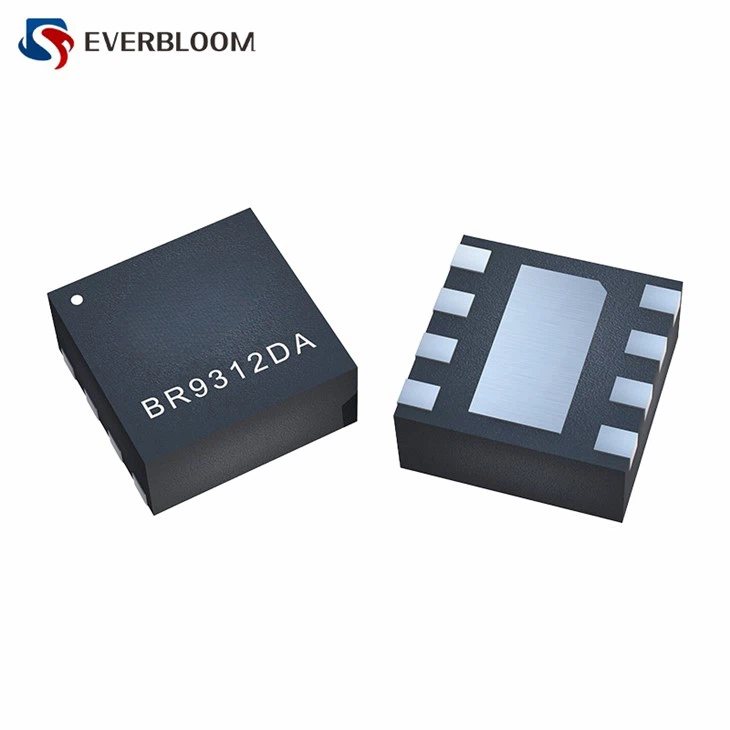

In wireless base stations, which typically operate at a variety of frequencies and handle relatively high - power signals, a larger RF limiter might be preferred. The need for good thermal management and low insertion loss at lower frequencies makes larger limiters a suitable choice. They can ensure stable performance over long periods and protect the sensitive receiver components from high - power interference.
For mobile devices like smartphones, smaller RF limiters are the norm. These devices need to be compact and lightweight, and the high - frequency performance of smaller limiters is well - suited for the 5G and Wi - Fi frequencies used in modern smartphones. Additionally, the lower power levels in mobile devices mean that the thermal management requirements are not as stringent as in base stations.
If you're looking for other RF front - end control ICs, you might be interested in our RF Switch - SPDT, RF Equalizer, and Digital Step Attenuator. These products work in tandem with RF limiters to provide a complete RF front - end solution.
Conclusion
In conclusion, the size of an RF limiter has a profound impact on its performance. Larger limiters offer better thermal management, lower insertion loss at lower frequencies, and more robust packaging options. They are ideal for high - power, low - frequency applications and environments where reliability is key.
Smaller RF limiters, on the other hand, have less parasitic effects, better high - frequency performance, and are more suitable for space - constrained applications. When choosing an RF limiter, it's important to consider the specific requirements of your application, including frequency range, power levels, and size constraints.
If you're in the market for RF limiters or other RF front - end control ICs and want to discuss your specific needs, feel free to reach out. We're here to help you find the best solution for your project. Whether you need a large, high - power limiter or a small, high - frequency one, we've got you covered. Let's have a chat and see how we can work together to meet your RF requirements.
References
- Pozar, D. M. (2011). Microwave Engineering. Wiley.
- Collin, R. E. (2001). Foundations for Microwave Engineering. Wiley.