



Hey there! I'm from an RF Limiter supplier, and today I wanna chat about how to choose the right RF limiter for a specific application. It's a crucial decision, and I'm here to break it down for you.
Understanding RF Limiters
First off, let's quickly go over what an RF limiter is. An RF limiter is a device that restricts the power of an RF signal. It protects sensitive components in a system from being damaged by high - power signals. It's like a safety guard for your RF equipment.
Factors to Consider When Choosing an RF Limiter
Frequency Range
The frequency range is super important. You need to know the frequency at which your application operates. Different RF limiters are designed to work within specific frequency bands. For example, if you're working on a wireless communication system that operates at 2.4 GHz, you'll need an RF limiter that can handle that frequency. If you choose a limiter with a frequency range that doesn't match your application, it won't work effectively. Some limiters are designed for low - frequency applications, like those in the AM radio range, while others are for high - frequency applications such as millimeter - wave frequencies used in 5G.
Power Handling
Another key factor is power handling. You need to know the maximum power that the RF limiter can handle. If your application has high - power signals, you'll need a limiter with a high power - handling capacity. On the other hand, if your signals are relatively low - power, you can go for a limiter with a lower power - handling rating. Overloading a limiter with too much power can cause it to fail, so getting this right is crucial.
Insertion Loss
Insertion loss is the amount of signal power that is lost when the RF signal passes through the limiter. You want a limiter with low insertion loss because you don't want to lose too much of your signal strength. A high insertion loss can degrade the performance of your system. So, when comparing different RF limiters, look for the ones with the lowest insertion loss for your specific application.
Recovery Time
Recovery time is how quickly the limiter returns to its normal operating state after being exposed to a high - power signal. In some applications, you need a limiter with a fast recovery time. For example, in a radar system, where there are short - duration high - power pulses, a limiter with a slow recovery time can cause problems. You want the limiter to be ready to handle the next signal as soon as possible.
Specific Applications and RF Limiter Choices
Wireless Communication Systems
In wireless communication systems, like Wi - Fi or cellular networks, you need RF limiters that can handle the specific frequencies used in these systems. For example, Wi - Fi operates at 2.4 GHz and 5 GHz. You'll want a limiter that has a good performance in these frequency bands. Also, since these systems often have a mix of low - and high - power signals, you need a limiter with a suitable power - handling capacity and low insertion loss. The High - Performance Equalizer can be used in conjunction with the RF limiter to further optimize the signal in these systems.

Radar Systems
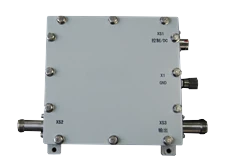
Radar systems have unique requirements. They often deal with high - power pulses. So, you need an RF limiter with a high power - handling capacity and a fast recovery time. The limiter should be able to protect the sensitive receiver components from the high - power transmit pulses. The Low Noise Block Converter can be used in radar systems along with the RF limiter to improve the overall performance.
Satellite Communication
Satellite communication systems operate at high frequencies and require RF limiters that can handle these frequencies. They also need to have low insertion loss to ensure that the signal quality is maintained over long distances. The RF Switch - SPDT can be used in satellite communication systems to switch between different RF paths, and an appropriate RF limiter can be used to protect the system components.
Working with an RF Limiter Supplier
As an RF limiter supplier, we have a wide range of products to meet different application needs. We can help you choose the right RF limiter based on your specific requirements. Our team of experts can provide you with technical support and advice. We understand that every application is unique, and we're committed to finding the best solution for you.
If you're in the process of choosing an RF limiter for your application, don't hesitate to reach out. We're here to make the selection process as easy as possible for you. Whether you're working on a small - scale project or a large - scale industrial application, we have the right RF limiter for you.
Conclusion
Choosing the right RF limiter for a specific application is a complex but important task. By considering factors like frequency range, power handling, insertion loss, and recovery time, you can make an informed decision. And if you need any help, our team at the RF limiter supplier is ready to assist you. So, if you're interested in purchasing RF limiters or need more information, just contact us for a detailed discussion and procurement negotiation.
References
- "RF and Microwave Engineering" by Pozar, D. M.
- "Wireless Communication Systems" by Rappaport, T. S.