


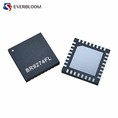


In the realm of RF (Radio Frequency) technology, Digital Step Attenuators (DSAs) play a crucial role in controlling signal strength with precision. As a leading supplier of Digital Step Attenuators, I am excited to delve into the mechanical dimensions and mounting options of these essential components. Understanding these aspects is vital for system designers and engineers who are looking to integrate DSAs into their RF systems effectively.
Mechanical Dimensions of Digital Step Attenuators
The mechanical dimensions of a Digital Step Attenuator are a critical consideration, as they determine how well the device can fit into a given RF system. These dimensions are influenced by several factors, including the technology used in the attenuator, the number of attenuation steps, and the packaging requirements.
Package Types
DSAs come in a variety of package types, each with its own set of mechanical dimensions. Some of the most common package types include:
- Surface - Mount Packages: These are widely used in modern RF designs due to their compact size and ease of assembly. Surface - mount packages such as the QFN (Quad Flat No - lead) and DFN (Dual Flat No - lead) are popular choices. For example, a typical QFN package for a DSA might have dimensions in the range of 2mm x 2mm to 5mm x 5mm. The small size of these packages allows for high - density PCB (Printed Circuit Board) layouts, which is beneficial in applications where space is limited, such as in mobile devices and small - form - factor RF modules.
- Through - Hole Packages: Although less common in recent designs, through - hole packages still have their place in certain applications. These packages are typically larger than surface - mount packages and require holes to be drilled in the PCB for component mounting. Through - hole packages offer better mechanical stability in some cases, especially in high - vibration environments. A common through - hole package for a DSA might have dimensions of around 10mm x 10mm or larger, depending on the complexity of the device.
Size and Shape Considerations
The overall size and shape of a DSA are also important. In addition to the package dimensions, the height of the device can be a critical factor, especially in applications where there are strict height limitations. For example, in some RF front - end modules, the DSA needs to fit within a specific height profile to ensure proper integration with other components such as RF Limiter and RF LNA.
The shape of the DSA can also impact its placement on the PCB. Some DSAs have a rectangular shape, which is easy to align with other components on the board. Others may have a more irregular shape, which can be designed to optimize the internal layout of the device for better performance.
Mounting Options for Digital Step Attenuators
Once the appropriate mechanical dimensions have been selected, the next step is to consider the mounting options for the DSA. The mounting method can affect the electrical performance, mechanical stability, and thermal management of the device.
Surface - Mount Technology (SMT)
Surface - mount technology is the most common mounting option for DSAs. SMT offers several advantages, including:
- Automated Assembly: SMT components can be easily placed on the PCB using automated pick - and - place machines. This reduces the assembly time and cost, making it suitable for high - volume production.
- Low Parasitic Effects: Since SMT components are mounted directly on the surface of the PCB, there are fewer parasitic inductances and capacitances compared to through - hole components. This results in better RF performance, especially at high frequencies.
- Compact Design: As mentioned earlier, SMT packages are generally smaller, allowing for more compact PCB designs.
To mount a DSA using SMT, the PCB is first printed with solder paste in the appropriate locations. The DSA is then placed on the solder paste using a pick - and - place machine, and the board is heated in a reflow oven to melt the solder and form a permanent connection.
Through - Hole Mounting
Through - hole mounting involves inserting the leads of the DSA through holes in the PCB and soldering them on the opposite side. This method has the following advantages:
- Mechanical Strength: Through - hole components are more mechanically stable compared to surface - mount components, as the leads are inserted through the board. This makes them suitable for applications where the device may be subject to mechanical stress, such as in industrial and automotive RF systems.
- Easier Rework: In some cases, through - hole components are easier to rework compared to surface - mount components. If a DSA needs to be replaced, it can be removed by desoldering the leads and pulling the component out of the holes.
However, through - hole mounting also has some disadvantages, such as larger PCB footprint and higher parasitic effects at high frequencies.
Custom Mounting Solutions
In some cases, custom mounting solutions may be required to meet the specific requirements of an RF system. For example, in applications where the DSA needs to be thermally coupled to a heat sink, a custom mounting bracket or thermal interface material may be used. Custom mounting solutions can also be designed to optimize the electrical performance of the DSA by minimizing the length of the signal paths and reducing electromagnetic interference.
Impact of Mechanical Dimensions and Mounting Options on Performance
The mechanical dimensions and mounting options of a DSA can have a significant impact on its performance.
Electrical Performance
The size and shape of the DSA can affect its electrical performance, especially at high frequencies. Smaller packages generally have lower parasitic inductances and capacitances, which can result in better insertion loss and return loss characteristics. The mounting method also plays a role in electrical performance. For example, surface - mount technology can provide better RF performance due to its lower parasitic effects compared to through - hole mounting.
Thermal Performance
The mechanical dimensions and mounting options can also impact the thermal performance of the DSA. Larger packages may have better thermal dissipation capabilities, as they have a larger surface area for heat transfer. Additionally, the mounting method can affect how well the heat is transferred from the DSA to the PCB or a heat sink. For example, using a thermal interface material between the DSA and a heat sink can significantly improve the thermal performance of the device.
Mechanical Stability
The mounting option chosen for the DSA can determine its mechanical stability. Through - hole mounting provides better mechanical stability compared to surface - mount technology, which is important in applications where the device may be subject to vibrations or mechanical shocks.
Conclusion
As a supplier of Digital Step Attenuators, we understand the importance of mechanical dimensions and mounting options in the design and integration of DSAs into RF systems. By offering a wide range of package types and mounting solutions, we can meet the diverse needs of our customers.
Whether you are designing a compact mobile device, a high - performance RF module, or an industrial RF system, choosing the right DSA with the appropriate mechanical dimensions and mounting options is crucial for achieving optimal performance.
If you are interested in learning more about our Digital Step Attenuators or would like to discuss your specific requirements, we encourage you to reach out to us for a procurement discussion. Our team of experts is ready to assist you in selecting the best DSA for your application.


References
- Pozar, D. M. (2011). Microwave Engineering (4th ed.). Wiley.
- Collin, R. E. (2001). Foundations for Microwave Engineering (2nd ed.). Wiley.