



As a leading supplier of RF front - end control ICs, I've delved deep into the intricate relationship between these integrated circuits and radiation patterns. Radiation patterns are fundamental in the field of radio frequency (RF) engineering, as they describe how an antenna radiates or receives electromagnetic energy in space. In this blog, we'll explore the various ways in which an RF front - end control IC can impact radiation patterns.
Understanding Radiation Patterns
Before we dive into the influence of RF front - end control ICs, let's briefly understand what radiation patterns are. A radiation pattern is a graphical representation of the radiation properties of an antenna as a function of space coordinates. It shows the relative strength of the radiated field in different directions from the antenna. There are two main types of radiation patterns: isotropic and directional. An isotropic radiator is a theoretical antenna that radiates equally in all directions, while a directional antenna radiates more energy in certain directions than others.
Role of RF Front - End Control ICs
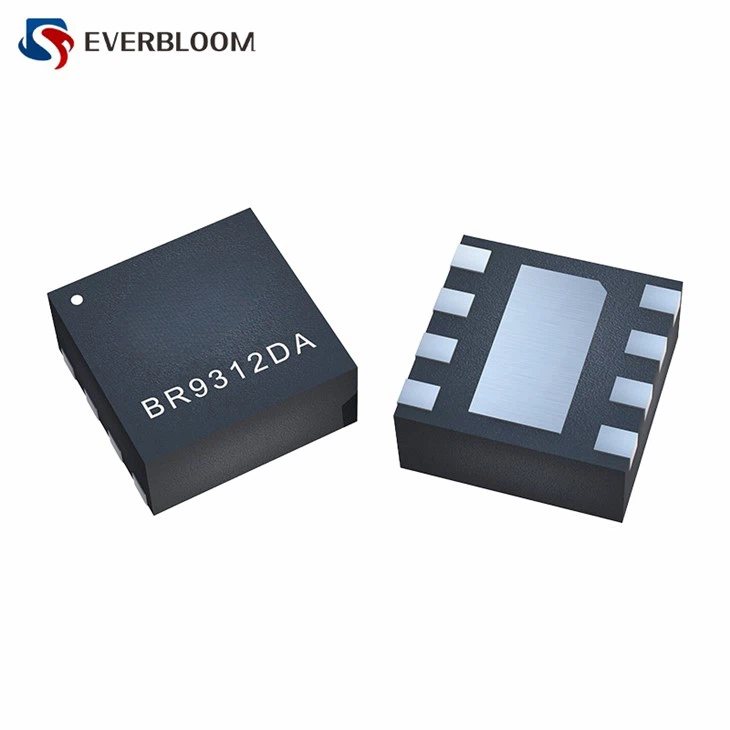
RF front - end control ICs play a crucial role in modern wireless communication systems. They are responsible for managing and controlling the signals at the front end of the RF chain, including functions such as amplification, filtering, and impedance matching. These functions can have a significant impact on the radiation patterns of an antenna system.

Amplification and Radiation Patterns
One of the primary functions of an RF front - end control IC is amplification. The gain provided by the IC can affect the overall power radiated by the antenna. When the gain is increased, the power radiated in the direction of maximum radiation is also increased. This can lead to a more pronounced main lobe in the radiation pattern, making the antenna more directional. On the other hand, if the gain is decreased, the radiation pattern may become more omnidirectional, as the power is more evenly distributed in different directions.
For example, in a mobile phone application, the RF front - end control IC can adjust the gain based on the signal strength and the distance to the base station. When the phone is far from the base station, the IC can increase the gain to improve the signal quality, which may result in a more directional radiation pattern towards the base station.
Filtering and Radiation Patterns
Filtering is another important function of RF front - end control ICs. Filters are used to remove unwanted frequencies from the RF signal, ensuring that only the desired frequencies are transmitted or received. The characteristics of the filter, such as its bandwidth and center frequency, can affect the radiation pattern.
A narrow - band filter can limit the frequency range of the radiated signal. This can result in a more focused radiation pattern, as the antenna is only radiating energy within a specific frequency band. In contrast, a wide - band filter allows a broader range of frequencies to pass through, which may lead to a more spread - out radiation pattern.
For instance, in a satellite communication system, a Low Noise Block Converter often uses a narrow - band filter to select the desired satellite frequency. This helps in achieving a highly directional radiation pattern towards the satellite, improving the signal reception and transmission efficiency.
Impedance Matching and Radiation Patterns
Impedance matching is essential for efficient power transfer between the RF front - end control IC and the antenna. When the impedance of the IC and the antenna are not matched, some of the power is reflected back, resulting in a loss of efficiency. This can also affect the radiation pattern.
If the impedance mismatch is significant, the radiation pattern may become distorted. The main lobe may shift in direction, and side lobes may become more prominent. By using an RF front - end control IC with proper impedance - matching capabilities, we can ensure that the antenna radiates energy efficiently and maintains a stable radiation pattern.
Phase and Amplitude Control
Many RF front - end control ICs offer phase and amplitude control features. These features are particularly useful in phased - array antenna systems, where multiple antennas are combined to form a single, more powerful antenna.
By adjusting the phase and amplitude of the signals fed to each antenna element, the radiation pattern of the phased - array antenna can be steered in different directions. The RF front - end control IC can precisely control these parameters, allowing for dynamic beamforming.
For example, in a radar system, the ability to steer the radiation pattern is crucial for detecting targets in different directions. The RF front - end control IC can adjust the phase and amplitude of the signals to direct the radar beam towards the target, improving the detection range and accuracy.
Impact on Multiple - Antenna Systems
In modern wireless communication systems, multiple - antenna systems, such as MIMO (Multiple - Input Multiple - Output), are becoming increasingly popular. RF front - end control ICs play a vital role in these systems by managing the signals of each antenna.
The interaction between the antennas in a multiple - antenna system can affect the overall radiation pattern. The RF front - end control IC can optimize the performance of each antenna, ensuring that the radiation patterns of the individual antennas combine effectively to achieve the desired system performance.
For instance, in a Wi - Fi router with multiple antennas, the RF front - end control IC can adjust the signals of each antenna to create a more uniform and wide - coverage radiation pattern, improving the signal strength and quality throughout the coverage area.
Using RF Equalizer and High - Performance Equalizer
RF equalizers and high - performance equalizers are important components in the RF front - end control system. They are used to compensate for the frequency - dependent losses in the RF path, ensuring that the signal has a flat frequency response.
By using an equalizer, the radiation pattern can be made more consistent across different frequencies. This is particularly important in wide - band communication systems, where the antenna may radiate energy over a broad frequency range. The equalizer can adjust the amplitude of the signal at different frequencies, ensuring that the radiation pattern remains stable and does not vary significantly with frequency.
Conclusion
In conclusion, RF front - end control ICs have a profound impact on radiation patterns. Through functions such as amplification, filtering, impedance matching, phase and amplitude control, they can shape the radiation pattern to meet the specific requirements of different applications. Whether it's a mobile phone, a satellite communication system, or a radar system, the proper selection and use of an RF front - end control IC are crucial for achieving optimal antenna performance.
As a supplier of RF front - end control ICs, we are committed to providing high - quality products that can effectively control and optimize radiation patterns. Our products are designed to meet the diverse needs of the RF industry, offering reliable performance and excellent functionality.
If you are interested in learning more about our RF front - end control ICs or have specific requirements for your application, we encourage you to contact us for a procurement discussion. Our team of experts is ready to assist you in finding the best solution for your RF front - end needs.
References
- Balanis, C. A. (2016). Antenna Theory: Analysis and Design. Wiley.
- Pozar, D. M. (2011). Microwave Engineering. Wiley.
- Razavi, B. (2011). RF Microelectronics. Prentice Hall.