



Hey there! As an SSD supplier, I often get asked about the differences between TLC, QLC, and SLC SSDs. It's a hot topic in the storage world, and understanding these differences can help you make the right choice for your needs. So, let's dive in!
What Are SSDs Anyway?
First off, let's quickly go over what SSDs are. Solid State Drives (SSDs) are a type of storage device that use flash memory to store data. Unlike traditional Hard Disk Drives (HDDs), they have no moving parts, which makes them faster, more durable, and less prone to mechanical failures.
SLC SSDs: The High - Performance King
Single - Level Cell (SLC) SSDs are the cream of the crop when it comes to performance. Each cell in an SLC SSD stores only one bit of data. This simplicity means that data can be written and read very quickly.
The main advantage of SLC SSDs is their speed. They have incredibly low latency and high transfer rates, making them ideal for applications that require lightning - fast data access. For example, in enterprise environments where servers need to handle a large number of read and write operations simultaneously, SLC SSDs can significantly boost performance.


Another great thing about SLC SSDs is their endurance. Since each cell is used to store just one bit, there's less wear and tear on the flash memory. This results in a longer lifespan compared to other types of SSDs. SLC SSDs can withstand a large number of Program/Erase (P/E) cycles, often up to 100,000 P/E cycles.
However, all these benefits come at a cost. SLC SSDs are the most expensive type of SSDs on the market. Their high production cost is due to the fact that they use more space on the flash chip to store less data. So, if you're on a tight budget, SLC SSDs might not be the best option for you.
TLC SSDs: The Balanced Option
Triple - Level Cell (TLC) SSDs are the most commonly used type of SSDs today. Each cell in a TLC SSD stores three bits of data. This allows for a higher storage density, which means you can get more storage space in a smaller form factor.
TLC SSDs offer a good balance between performance, cost, and capacity. They are much more affordable than SLC SSDs, making them a popular choice for consumer applications such as laptops, desktops, and gaming PCs. In terms of performance, TLC SSDs are still quite fast, although not as fast as SLC SSDs. They can handle most everyday tasks with ease, like web browsing, document editing, and even some light gaming.
But TLC SSDs do have their limitations. Since each cell stores more bits, there's more wear and tear on the flash memory. This results in a lower number of P/E cycles compared to SLC SSDs, usually around 1,000 - 3,000 P/E cycles. Over time, this can lead to a decrease in performance and eventually, data loss if the drive is used intensively.
QLC SSDs: The High - Capacity Contender
Quad - Level Cell (QLC) SSDs are the newest kids on the block. Each cell in a QLC SSD stores four bits of data, which means they have the highest storage density of all the SSD types. This makes them perfect for applications where you need a large amount of storage space at a low cost, such as data centers for storing large amounts of archival data.
QLC SSDs are extremely cost - effective. You can get a huge amount of storage space for a relatively low price. For example, you can find 4TB or even 8TB QLC SSDs at a fraction of the cost of SLC or TLC SSDs with the same capacity.
However, QLC SSDs come with some trade - offs. Their performance is the lowest among the three types. They have higher latency and slower transfer rates, especially when it comes to write operations. Also, their endurance is the poorest, with only around 100 - 300 P/E cycles. This means they are not suitable for applications that require frequent and intensive data writing.
Which One Should You Choose?
The choice between SLC, TLC, and QLC SSDs depends on your specific needs.
If you're an enterprise user who needs the highest performance and endurance for critical applications, SLC SSDs are the way to go. They are worth the investment if you can afford them.
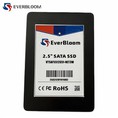
For most consumer users, TLC SSDs are the best option. They offer a good balance of performance, cost, and capacity, and can handle most everyday tasks without any issues. You can check out our 2.5 Inch SATA III SSD and MSATA SATA III SSD for great TLC options.
If you need a large amount of storage space for archival purposes and don't mind sacrificing some performance, QLC SSDs are a great choice. Our NVMe M.2 PCIe 4.0 SSD offers high - capacity QLC options.
Contact Us for Your SSD Needs
If you're interested in purchasing SSDs, whether it's SLC, TLC, or QLC, we're here to help. We have a wide range of SSD products to meet your specific requirements. Whether you're a small business owner looking to upgrade your servers or a gamer wanting to boost your PC's performance, we've got you covered.
Just reach out to us, and our team of experts will be happy to assist you in choosing the right SSD for your needs. We can also provide you with detailed information about our products, pricing, and any technical support you might need. So, don't hesitate to get in touch and start the procurement process. We're looking forward to working with you!
References
- "Flash Memory Basics", Solid State Storage Initiative
- "SSD Performance and Endurance", StorageReview.com
- "Comparing SLC, TLC, and QLC SSDs", Tom's Hardware