


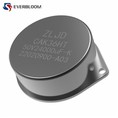

In the ever - evolving landscape of radio frequency (RF) technology, millimeter - wave frequencies have emerged as a critical frontier. As wireless communication systems strive for higher data rates and more efficient use of the spectrum, millimeter - wave frequencies, typically ranging from 30 GHz to 300 GHz, are being leveraged for applications like 5G, satellite communication, and automotive radar. One essential component in these high - frequency systems is the RF limiter.
Understanding RF Limiters
RF limiters are devices designed to protect sensitive RF components from excessive input power. They allow low - level signals to pass through with minimal attenuation but start to limit the output power when the input power exceeds a certain threshold. This protection is crucial as high - power signals can damage components such as Low Noise Block Converters (Low Noise Block Converter), RF Switch - SPDTs (RF Switch - SPDT), and RF LNAs (RF LNA).
RF Limiters for Millimeter - Wave Frequencies
When it comes to millimeter - wave frequencies, the design and implementation of RF limiters face unique challenges. At these high frequencies, the electrical properties of materials change significantly, and parasitic effects become more prominent. For example, the skin effect, where the current in a conductor tends to flow near the surface, becomes more pronounced at millimeter - wave frequencies. This can affect the performance of the limiter, leading to increased insertion loss and reduced power handling capabilities.
However, advancements in semiconductor technology have made it possible to develop RF limiters suitable for millimeter - wave frequencies. Gallium nitride (GaN) and silicon germanium (SiGe) are two semiconductor materials that have shown great promise in this regard. GaN, with its high electron mobility and breakdown voltage, can handle high - power signals at millimeter - wave frequencies. SiGe, on the other hand, offers a good balance between performance and cost, making it a popular choice for many applications.
Key Features of Millimeter - Wave RF Limiters
- Low Insertion Loss: In millimeter - wave systems, even a small amount of insertion loss can have a significant impact on the overall system performance. Therefore, millimeter - wave RF limiters are designed to have low insertion loss at the operating frequency. This ensures that the signal passes through the limiter with minimal degradation.
- Fast Response Time: When a high - power signal arrives, the limiter needs to respond quickly to protect the downstream components. Millimeter - wave RF limiters are engineered to have a fast response time, typically in the nanosecond range.
- High Power Handling: With the increasing power levels in millimeter - wave systems, RF limiters need to be able to handle high - power signals without being damaged. The power handling capability of a millimeter - wave RF limiter is an important parameter, and it is often specified in terms of the maximum input power that the limiter can handle.
- Broadband Operation: Many millimeter - wave applications require broadband operation to cover a wide range of frequencies. Millimeter - wave RF limiters are designed to provide a relatively flat response over a broad frequency band, ensuring that they can be used in a variety of applications.
Applications of Millimeter - Wave RF Limiters
- 5G Communication: 5G networks operate at millimeter - wave frequencies to achieve high - speed data transfer. RF limiters are used in 5G base stations and user equipment to protect the sensitive RF components from high - power interference and over - voltage conditions.
- Satellite Communication: In satellite communication systems, millimeter - wave frequencies are used for high - data - rate communication links. RF limiters are used to protect the satellite transceivers from high - power signals that may be present in the space environment.
- Automotive Radar: Automotive radar systems use millimeter - wave frequencies to detect objects and measure distances. RF limiters are used in these systems to protect the radar receivers from high - power reflections and interference.
Our Offerings as an RF Limiter Supplier
As a leading RF limiter supplier, we understand the unique requirements of millimeter - wave applications. Our millimeter - wave RF limiters are designed using the latest semiconductor technology to provide high - performance and reliable protection for your RF systems.
We offer a wide range of millimeter - wave RF limiters with different specifications to meet the diverse needs of our customers. Our limiters feature low insertion loss, fast response time, high power handling, and broadband operation. Whether you are working on a 5G project, a satellite communication system, or an automotive radar application, we have the right RF limiter for you.


Why Choose Our RF Limiters?
- Quality and Reliability: We adhere to strict quality control standards in the manufacturing process of our RF limiters. Our products are thoroughly tested to ensure that they meet the highest quality and reliability requirements.
- Technical Support: Our team of experienced engineers is available to provide technical support to our customers. We can help you select the right RF limiter for your application and provide assistance with installation and troubleshooting.
- Customization: We understand that different applications may have unique requirements. Therefore, we offer customization services to meet the specific needs of our customers. Whether you need a limiter with a specific power handling capability or a particular frequency range, we can work with you to develop a customized solution.
Contact Us for Procurement
If you are interested in our millimeter - wave RF limiters or need more information about our products, we encourage you to contact us for procurement discussions. Our sales team is ready to assist you in finding the best solution for your RF system.
References
- Pozar, D. M. (2011). Microwave Engineering. Wiley.
- Collin, R. E. (2001). Foundations for Microwave Engineering. Wiley.
- Vendelin, G. D., Pavio, A. M., & Rohde, U. L. (1990). Microwave Circuit Design Using Linear and Nonlinear Techniques. Wiley.