



As a supplier of Digital Step Attenuators, I often encounter inquiries about the applicability of these devices in industrial control systems. In this blog post, I will delve into the technical aspects, advantages, and potential challenges of using a Digital Step Attenuator in industrial control systems.
Technical Overview of Digital Step Attenuators
A Digital Step Attenuator is an electronic device used to reduce the power of an electrical signal. It offers a precise and adjustable attenuation level, which can be controlled digitally. This digital control allows for quick and accurate adjustments, making it suitable for a wide range of applications. The Digital Step Attenuator typically operates in the radio frequency (RF) and microwave frequency ranges, with attenuation steps that can be as small as 0.25 dB or 0.5 dB.
Advantages of Using Digital Step Attenuators in Industrial Control Systems
Precision and Accuracy
One of the primary advantages of using a Digital Step Attenuator in industrial control systems is its high precision and accuracy. In industrial applications, precise control of signal strength is often crucial. For example, in a wireless communication system used in an industrial setting, the signal strength needs to be carefully adjusted to ensure reliable communication over a specific distance. A Digital Step Attenuator can provide the necessary precision to achieve this, allowing for fine-tuning of the signal strength in small, discrete steps.
Remote Control and Automation
Digital Step Attenuators can be easily integrated into automated control systems. They can be controlled remotely via a digital interface, such as an I2C or SPI bus. This feature is particularly useful in industrial control systems, where many processes need to be automated and monitored from a central location. For instance, in a large manufacturing plant, multiple Digital Step Attenuators can be used to control the signal strength in different areas of the plant, and these attenuators can be controlled simultaneously from a control room.
Wide Frequency Range
Industrial control systems often operate over a wide frequency range. Digital Step Attenuators are available with a wide frequency coverage, from a few megahertz to several gigahertz. This wide frequency range makes them suitable for a variety of industrial applications, including radar systems, wireless communication systems, and test and measurement equipment.

Compatibility with Other Components
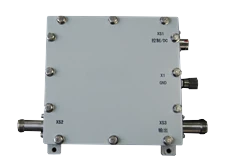
Digital Step Attenuators can be easily integrated with other components in an industrial control system. They can be used in conjunction with High-Performance Equalizers to compensate for signal losses and distortions, and with RF LNAs to amplify weak signals. This compatibility allows for the design of complex and efficient industrial control systems.
Potential Challenges and Solutions
Environmental Conditions
Industrial environments can be harsh, with high temperatures, humidity, and electromagnetic interference. Digital Step Attenuators need to be designed to withstand these conditions. Many manufacturers offer ruggedized versions of Digital Step Attenuators that are designed to operate in extreme environments. These attenuators are typically housed in a sealed enclosure and are made of materials that can resist corrosion and temperature variations.
Cost
The cost of Digital Step Attenuators can be a concern for some industrial applications. However, the benefits of using these devices, such as precision, remote control, and compatibility, often outweigh the cost. Additionally, as the technology advances, the cost of Digital Step Attenuators is gradually decreasing, making them more affordable for industrial use.
Integration Complexity
Integrating a Digital Step Attenuator into an existing industrial control system can be complex. It requires a good understanding of the system's requirements and the technical specifications of the attenuator. To overcome this challenge, many suppliers offer technical support and design services to help customers integrate the Digital Step Attenuator into their systems.
Case Studies
Wireless Communication in a Manufacturing Plant
In a large manufacturing plant, a wireless communication system was used to monitor and control various processes. The signal strength needed to be adjusted to ensure reliable communication between different parts of the plant. A Digital Step Attenuator was installed in the system to provide precise control of the signal strength. The attenuator was controlled remotely from a central control room, allowing for quick and easy adjustments. As a result, the communication reliability was significantly improved, and the overall efficiency of the manufacturing process was enhanced.
Radar System in an Industrial Monitoring Application
In an industrial monitoring application, a radar system was used to detect the presence of objects in a specific area. The signal strength of the radar system needed to be adjusted to optimize the detection range and accuracy. A Digital Step Attenuator was used in the radar system to provide the necessary signal attenuation. The attenuator was integrated with other components in the system, such as a High-Performance Equalizer and an RF LNA, to achieve the best performance. The use of the Digital Step Attenuator improved the detection accuracy of the radar system and reduced false alarms.
Conclusion
In conclusion, a Digital Step Attenuator can be effectively used in industrial control systems. Its precision, remote control capabilities, wide frequency range, and compatibility with other components make it a valuable component in many industrial applications. Although there are some potential challenges, such as environmental conditions, cost, and integration complexity, these challenges can be overcome with proper design and technical support.
If you are interested in using a Digital Step Attenuator in your industrial control system, I encourage you to contact us for more information. Our team of experts can provide you with detailed technical specifications, application notes, and design support to help you select the right Digital Step Attenuator for your needs. We look forward to discussing your requirements and working with you to find the best solution for your industrial control system.
References
- "RF and Microwave Attenuators: Theory, Design, and Applications" by David M. Pozar
- "Industrial Control Systems: Fundamentals and Applications" by William Bolton
- Manufacturer's datasheets and application notes for Digital Step Attenuators, High-Performance Equalizers, and RF LNAs.