


Hey there! As a supplier of Ultra Low Noise Amplifiers (ULNAs), I've been getting a lot of questions about impedance matching techniques. So, I thought I'd share some insights on this crucial aspect of ULNA design and performance.
First off, let's understand why impedance matching is so important for ULNAs. In simple terms, impedance matching ensures that the maximum amount of power is transferred from the source to the load. For ULNAs, this is essential because any power loss can lead to increased noise and reduced performance. A well - matched ULNA can provide better signal - to - noise ratio (SNR), which is the holy grail when it comes to low - noise applications.
One of the most common impedance matching techniques is the use of passive components like resistors, capacitors, and inductors. These can be arranged in various configurations to transform the impedance of the source or the load to match each other. For example, a simple LC (inductor - capacitor) matching network can be used to match the impedance of an antenna to the input of a ULNA. By carefully selecting the values of the inductor and capacitor, we can achieve a near - perfect match over a specific frequency range.
Another popular technique is the use of transmission line transformers. These are based on the principles of electromagnetic coupling and can provide a wide - bandwidth impedance match. Transmission line transformers are especially useful in high - frequency applications where traditional LC networks may not work as effectively. They can be designed to match different impedance ratios and are relatively easy to integrate into the ULNA circuit.
Now, let's talk about some more advanced techniques. One such technique is the use of active impedance matching circuits. These circuits use active components like transistors to adjust the impedance dynamically. This is particularly useful in applications where the source or load impedance may vary over time or with different operating conditions. Active impedance matching can provide a more stable and efficient match compared to passive techniques, but it also adds some complexity to the design.
When it comes to our ULNAs, we've incorporated a combination of these techniques to ensure optimal performance. Our engineers spend a lot of time testing and fine - tuning the impedance matching networks to achieve the best possible results. Whether it's a High Linearity Low Noise Amplifier for high - precision measurement applications or a Low Phase Noise Amplifier for communication systems, impedance matching is at the heart of our design process.
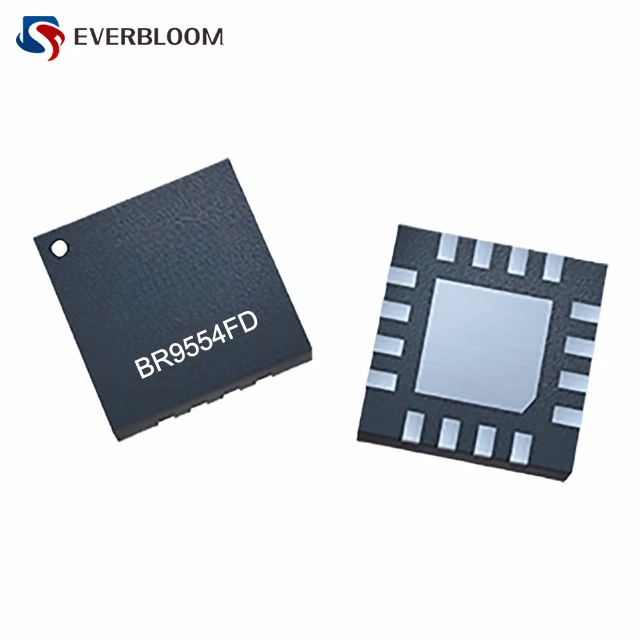

We also offer High Efficiency RF Power Amplifier options that benefit from proper impedance matching. In power amplifiers, impedance matching is crucial for maximizing the power transfer and minimizing the heat dissipation. By using the right impedance matching techniques, we can ensure that our power amplifiers operate at peak efficiency, which translates to lower power consumption and longer battery life in portable devices.
Let's take a closer look at how impedance matching affects the performance of our ULNAs in real - world scenarios. In a wireless communication system, for example, the ULNA is often connected to an antenna. If the impedance of the antenna and the ULNA are not matched, a significant amount of the received signal power will be reflected back, leading to a loss in signal strength and an increase in noise. This can result in poor communication quality, dropped calls, or slow data transfer rates.
On the other hand, a well - matched ULNA can receive the maximum amount of signal power from the antenna, amplify it with minimal noise, and pass it on to the rest of the communication system. This leads to a stronger and clearer signal, better communication reliability, and improved overall system performance.
In a test and measurement application, impedance matching is equally important. For instance, when measuring very low - level signals, any impedance mismatch can introduce errors and noise into the measurement. Our ULNAs are designed to provide a high - quality impedance match to the measurement equipment, ensuring accurate and reliable measurements.
Now, I know that all this technical talk can be a bit overwhelming. But the bottom line is that impedance matching is a critical factor in the performance of ULNAs. Whether you're a system designer, an engineer working on a new project, or a researcher looking for the best components for your experiments, choosing a ULNA with proper impedance matching can make a huge difference.
If you're in the market for a high - quality ULNA, we'd love to hear from you. Our team of experts is always ready to help you choose the right product for your specific needs. We can provide detailed technical specifications, application notes, and even offer custom design services if required.
Contact us today to start a conversation about your ULNA requirements. Let's work together to find the best impedance - matched solution for your project and take your system performance to the next level.
References
- Pozar, D. M. (2011). Microwave Engineering. Wiley.
- Gonzalez, G. (2010). Microwave Transistor Amplifiers: Analysis and Design. Prentice Hall.