


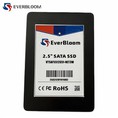
Yo, what's up tech enthusiasts! I'm here today to dig deep into the endurance of MSATA SATA III SSDs. As a supplier of these nifty storage devices, I've seen firsthand how they perform in various scenarios, and I'm stoked to share my insights with you.
First off, let's talk about what endurance means in the context of an SSD. Endurance refers to how long an SSD can last and how many write cycles it can handle before it starts to degrade or fail. This is super important because, unlike traditional hard disk drives (HDDs), SSDs have a limited number of write cycles due to the nature of their flash memory.
MSATA SATA III SSDs are a popular choice for many users because they offer a good balance between performance and cost. They use the SATA III interface, which provides a maximum data transfer rate of 6 Gbps. This is plenty fast for most everyday tasks, like browsing the web, streaming videos, and running office applications.
But how do they stack up in terms of endurance? Well, it depends on a few factors, such as the type of flash memory used, the controller, and the way the SSD is used.
Let's start with the flash memory. There are two main types of flash memory used in SSDs: Single-Level Cell (SLC) and Multi-Level Cell (MLC). SLC flash memory is the most durable because it stores only one bit of data per cell. This means that it can handle more write cycles and has a longer lifespan. However, it's also more expensive, so it's usually only used in high-end enterprise SSDs.
On the other hand, MLC flash memory stores multiple bits of data per cell, which makes it more cost-effective but less durable. There are also variations of MLC, such as Triple-Level Cell (TLC) and Quad-Level Cell (QLC), which store three and four bits of data per cell, respectively. These are even cheaper but have even lower endurance.
Most MSATA SATA III SSDs use MLC or TLC flash memory because it's more affordable and still provides decent performance. However, some high-end models may use SLC flash memory for better endurance.
The controller is another important factor that affects the endurance of an SSD. The controller manages the data flow between the computer and the flash memory, and it also performs wear leveling, which helps to distribute the write cycles evenly across the flash memory. A good controller can significantly improve the endurance of an SSD by reducing the stress on the flash memory.
In addition to the flash memory and the controller, the way the SSD is used also plays a role in its endurance. For example, if you use the SSD for heavy write-intensive tasks, such as video editing or database management, it will wear out faster than if you use it for light tasks, such as web browsing or document editing.
So, what's the typical endurance of an MSATA SATA III SSD? Well, it's hard to give a specific number because it varies depending on the factors mentioned above. However, most MSATA SATA III SSDs have a Terabytes Written (TBW) rating, which indicates how many terabytes of data can be written to the SSD before it reaches the end of its lifespan.
A typical MSATA SATA III SSD with MLC flash memory may have a TBW rating of around 300 - 500 TB, while an SSD with TLC flash memory may have a TBW rating of around 100 - 300 TB. Of course, these are just rough estimates, and the actual endurance may vary depending on the specific model and how it's used.
Now, let's compare the endurance of MSATA SATA III SSDs with other types of SSDs. For example, NVMe M.2 PCIe 4.0 SSD and NVMe M.2 PCIe 3.0 SSD offer much higher performance than MSATA SATA III SSDs because they use the NVMe protocol and the PCIe interface, which provides faster data transfer rates. However, they also tend to have lower endurance because they are designed for high-performance applications that generate a lot of write traffic.
On the other hand, SATA III M.2 SSD is similar to MSATA SATA III SSD in terms of performance and endurance. The main difference is the form factor, with M.2 being smaller and more compact.


So, if you're looking for an SSD with good endurance and decent performance for everyday use, an MSATA SATA III SSD may be a good choice. However, if you need high-performance storage for heavy write-intensive tasks, you may want to consider an NVMe SSD.
As a supplier of MSATA SATA III SSDs, I can tell you that we offer a wide range of products with different capacities, performance levels, and endurance ratings. Whether you're a casual user or a professional, we have an SSD that can meet your needs.
If you're interested in learning more about our MSATA SATA III SSDs or if you're looking to make a purchase, don't hesitate to reach out. We're always happy to answer your questions and help you find the right SSD for your needs.
In conclusion, the endurance of an MSATA SATA III SSD is an important factor to consider when choosing a storage device. By understanding the factors that affect endurance and comparing different types of SSDs, you can make an informed decision and choose an SSD that will last for years to come.
References:
- Various industry reports on SSD technology and performance
- Manufacturer specifications of MSATA SATA III SSDs