


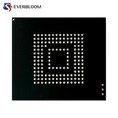

As a long - standing EMMC (Embedded MultiMediaCard) supplier, I've witnessed the evolution and increasing importance of EMMC technology in various industries. In this blog, I'll delve into the concept of EMMC endurance, exploring what it means, why it matters, and how different types of EMMC products vary in their endurance capabilities.
Understanding EMMC Endurance
EMMC endurance refers to the ability of an EMMC device to withstand a certain number of write and erase cycles over its lifespan. Every time data is written to or erased from an EMMC, the flash memory cells within the device experience wear. This wear can lead to a decrease in performance and eventually, the failure of the device.
The endurance of an EMMC is typically measured in Program/Erase (P/E) cycles. A P/E cycle consists of writing data to a block of memory and then erasing it. Different EMMC products have different P/E cycle ratings, which are determined by factors such as the type of flash memory used, the manufacturing process, and the intended application.
Factors Affecting EMMC Endurance
Flash Memory Type
There are two main types of flash memory used in EMMC: Single - Level Cell (SLC) and Multi - Level Cell (MLC). SLC flash memory stores one bit of data per cell. This simplicity allows for faster data access and a significantly higher number of P/E cycles. SLC EMMCs can typically endure up to 100,000 P/E cycles, making them ideal for applications where high endurance and reliability are crucial, such as industrial control systems and military equipment.
On the other hand, MLC flash memory stores multiple bits of data per cell. While MLC offers higher storage density at a lower cost, it has a lower endurance compared to SLC. MLC EMMCs usually have a P/E cycle rating of around 3,000 - 10,000 cycles, which is suitable for consumer applications like smartphones and tablets.


Manufacturing Process
The manufacturing process also plays a vital role in determining EMMC endurance. Advanced manufacturing techniques can improve the quality and reliability of the flash memory cells, increasing their ability to withstand P/E cycles. For example, newer manufacturing processes may use smaller transistors and more efficient cell structures, which can reduce the wear on the cells during write and erase operations.
Application Requirements
The intended application of an EMMC can have a significant impact on its endurance. In consumer applications, such as smartphones, the EMMC is typically used for storing user data, apps, and media files. The write and erase operations in these devices are relatively infrequent, so a lower - endurance EMMC can usually meet the requirements.
However, in industrial applications, such as data loggers, surveillance systems, and automotive electronics, the EMMC may be subjected to frequent and intensive write and erase operations. In these cases, a high - endurance EMMC is essential to ensure long - term reliability and performance.
Industrial Grade vs. Consumer Grade EMMC Endurance
Industrial Grade EMMC
Industrial grade EMMCs are designed to meet the demanding requirements of industrial applications. They are built with high - quality components and advanced manufacturing processes to ensure high endurance and reliability. For example, our HS400 Industrial Grade EMMC is engineered to withstand a large number of P/E cycles, making it suitable for applications where data integrity and long - term performance are critical.
Industrial grade EMMCs often use SLC or high - endurance MLC flash memory. They also feature advanced error - correction codes (ECC) and wear - leveling algorithms to further enhance their endurance. These features help to distribute the write and erase operations evenly across the flash memory cells, reducing the wear on individual cells and extending the lifespan of the EMMC.
Consumer Grade EMMC
Consumer grade EMMCs are designed for use in consumer electronics, such as smartphones, tablets, and digital cameras. They are optimized for cost - effectiveness and high storage density. Our HS400 Consumer Grade EMMC offers a good balance between performance and cost, making it a popular choice for consumer devices.
Consumer grade EMMCs typically use MLC flash memory, which has a lower endurance compared to SLC. However, for most consumer applications, the lower endurance is sufficient because the write and erase operations are not as frequent or intensive as in industrial applications.
Measuring and Testing EMMC Endurance
To ensure the quality and reliability of our EMMC products, we conduct rigorous endurance testing. Our testing process involves subjecting the EMMC to a large number of write and erase cycles under controlled conditions. We monitor the performance of the EMMC throughout the testing process, including factors such as data transfer speed, error rate, and power consumption.
We also use advanced testing equipment and techniques to simulate real - world usage scenarios. For example, we may test the EMMC under different temperature and humidity conditions to ensure its performance and endurance in various environments.
Importance of EMMC Endurance in Different Industries
Automotive Industry
In the automotive industry, EMMCs are used in a variety of applications, such as in - vehicle infotainment systems, advanced driver - assistance systems (ADAS), and engine control units (ECUs). These applications require high - reliability and long - lasting storage solutions. A high - endurance EMMC is essential to ensure that the data stored in these systems is accurate and accessible over the long term, even in harsh automotive environments.
Healthcare Industry
In the healthcare industry, EMMCs are used in medical devices such as patient monitors, diagnostic equipment, and portable medical devices. The data stored in these devices is often critical for patient care, so the EMMC must have high endurance and reliability. A failure of the EMMC could lead to loss of important patient data, which could have serious consequences.
Industrial Automation
In industrial automation, EMMCs are used in programmable logic controllers (PLCs), human - machine interfaces (HMIs), and other industrial control systems. These systems require high - speed and reliable data storage to ensure smooth operation. A high - endurance EMMC can withstand the frequent write and erase operations associated with industrial automation, ensuring long - term performance and reliability.
Conclusion
EMMC endurance is a critical factor in determining the performance and reliability of EMMC devices. Understanding the factors that affect EMMC endurance, such as flash memory type, manufacturing process, and application requirements, is essential for selecting the right EMMC for your specific needs.
As an EMMC supplier, we offer a wide range of EMMC products with different endurance capabilities to meet the diverse needs of our customers. Whether you are looking for a high - endurance industrial grade EMMC or a cost - effective consumer grade EMMC, we have the solution for you.
If you are interested in learning more about our EMMC products or have specific requirements for your application, we encourage you to contact us for a procurement discussion. We are committed to providing high - quality EMMC solutions and excellent customer service.
References
- Flash Memory Handbook, by Robert A. Pohlmann
- EMMC Technical Specifications, JEDEC Solid State Technology Association